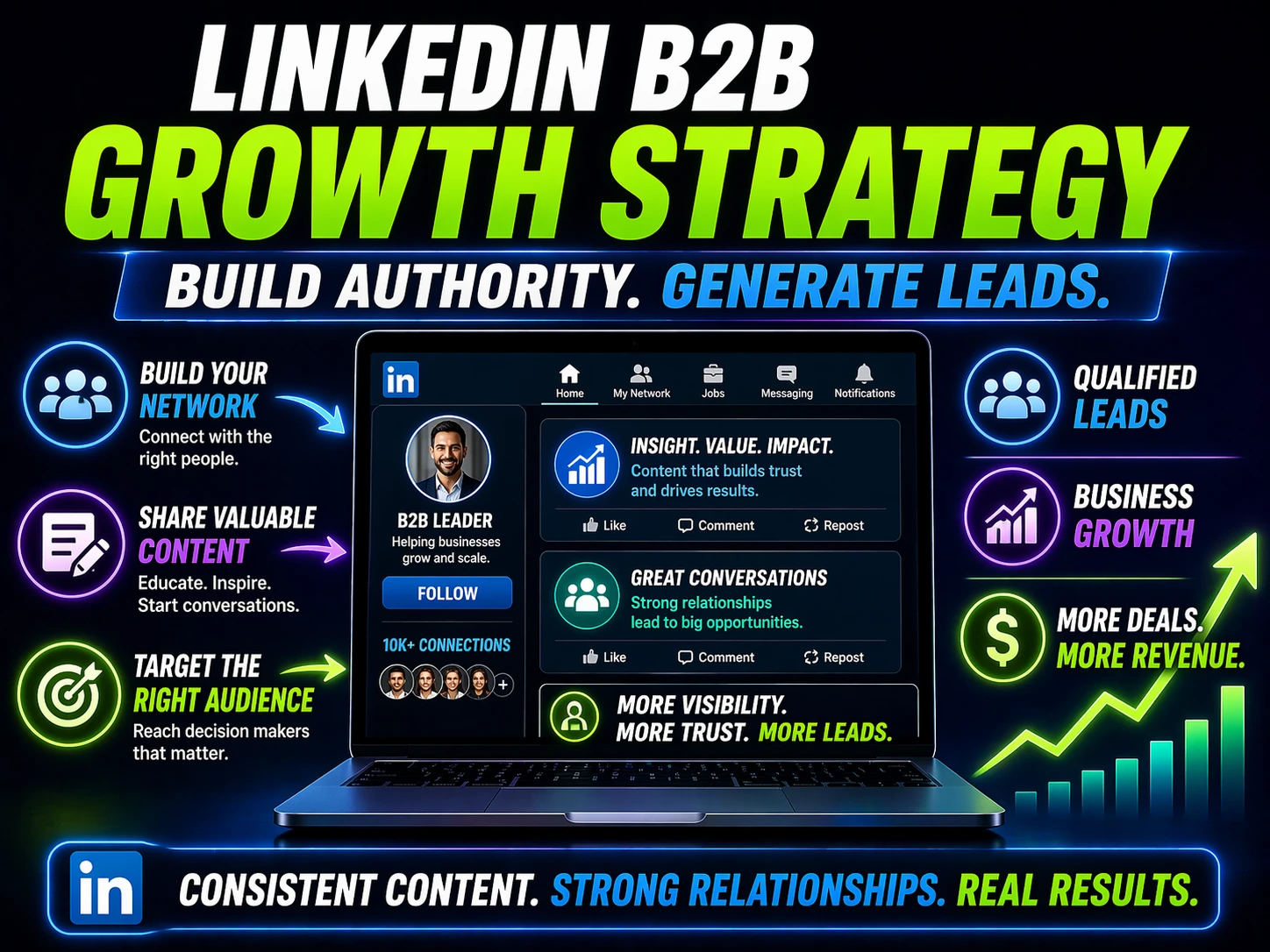
LinkedIn has 1 billion members and the highest average income of any social platform. It is the only place on the internet where your target decision maker (the CFO, the procurement manager, the founder) is actively looking for content related to their professional challenges. Most businesses waste this opportunity entirely by using LinkedIn the way they use every other social platform: posting company updates nobody cares about and wondering why the leads are not coming.
Why LinkedIn Is Different From Every Other B2B Channel
On LinkedIn, professional context is the default. When someone reads your content here, they are in work mode, thinking about challenges, evaluating solutions, and forming opinions about suppliers and partners. This means the content that performs best is substantive, direct, and specifically useful to a professional audience. The performative personal branding posts that saturate the platform are actually the least effective for B2B lead generation. What works is demonstrating expertise that the reader cannot easily find elsewhere.
The Personal Brand vs Company Page Question
Almost every study on LinkedIn organic reach reaches the same conclusion: personal profiles dramatically outperform company pages for content reach and engagement. This is partly algorithmic (LinkedIn's feed prioritises content from people over organisations) and partly psychological, people connect with people, not logos. For B2B lead generation, the most effective strategy is to build the personal brand of your founder, CEO, or top subject matter experts, and use the company page as a secondary amplification channel.
What This Means in Practice
It means the face of your LinkedIn strategy should be a person who is genuinely knowledgeable about your field, willing to share real opinions (not just safe corporate content), and consistent in their posting. They do not need to be a polished communicator, in fact, authenticity consistently outperforms polish on LinkedIn. What they do need is a clear point of view and the discipline to show up regularly.
The Content Framework That Generates Leads
After managing LinkedIn strategies for B2B clients across professional services, SaaS, marketing, logistics, and finance, the content mix that consistently produces the best lead generation results is what we call the 4 to 1 framework: four value posts for every one direct offer or soft pitch.
The Four Value Content Types
- The Insight Post: A specific observation about your industry that challenges a common assumption. "Everyone in [industry] is doing X. Here is why that is costing them Y." These perform because they trigger reactions (agreement, disagreement, and sharing) all of which expand reach.
- The Case Study Post: A specific client result, with the problem, the approach, and the measurable outcome described concisely. No fluff, no vague claims, just what you did and what happened. These drive DMs from people with the same problem.
- The Framework Post: A process, checklist, or mental model your audience can apply immediately. "The 5 questions we ask before building any content strategy." These get saved and shared by people who plan to use them.
- The Experience Post: Something real that happened, a mistake, a lesson, a decision that turned out differently than expected. These build the human trust that makes the other content more believable.
The most effective LinkedIn strategy for B2B is not the one with the most followers. It is the one that makes the right 50 people think of you first when they have the problem you solve.
LinkedIn Outreach That Does Not Get Ignored
The standard LinkedIn connection request followed by an immediate sales pitch is the single most effective way to ensure your message is never read. Anyone who has been on LinkedIn for more than six months recognises this pattern and ignores it by reflex. The outreach that works is sequenced differently: connect with a personalised note that references something specific about the recipient, deliver two to three pieces of genuine value before mentioning your offer, and when you do make an ask, make it small and low commitment, a conversation, not a demo or a proposal.
LinkedIn Search and Sales Navigator for Precision Targeting
LinkedIn's search functionality is one of the most powerful B2B prospecting tools available. You can filter by job title, company size, industry, geography, seniority level, and dozens of other parameters to build a highly specific list of exactly the people you want to reach. Sales Navigator extends this with additional filters, saved searches, and lead tracking. For businesses selling to a defined buyer persona, this precision is invaluable: it means every outreach effort is directed at a relevant prospect rather than a broad audience.
The LinkedIn Newsletter: An Underused Growth Asset
LinkedIn newsletters are one of the most underused tools on the platform. When you publish a newsletter, all of your connections are notified, which means every issue reaches your entire network without the algorithm filtering your distribution. For consistent thought leaders building an audience of potential clients, this is a significant advantage. A weekly or fortnightly newsletter covering a topic you genuinely know deeply, sent to a growing base of connected professionals, is one of the most cost effective B2B lead generation tools available today.
The Bottom Line
LinkedIn B2B lead generation is not about follower counts or viral posts. It is about showing up consistently with content that is genuinely useful to the specific people who buy what you sell, building the trust that makes your outreach welcome rather than intrusive, and making it easy for interested prospects to take the next step. The businesses doing this well, with a personal brand strategy, a disciplined content framework, and targeted outreach, are generating a consistent pipeline from organic activity alone.
Want a LinkedIn Strategy That Generates Pipeline?
We build and execute LinkedIn growth strategies for B2B businesses. Let us show you what a real approach looks like.
Book a LinkedIn Strategy Call →