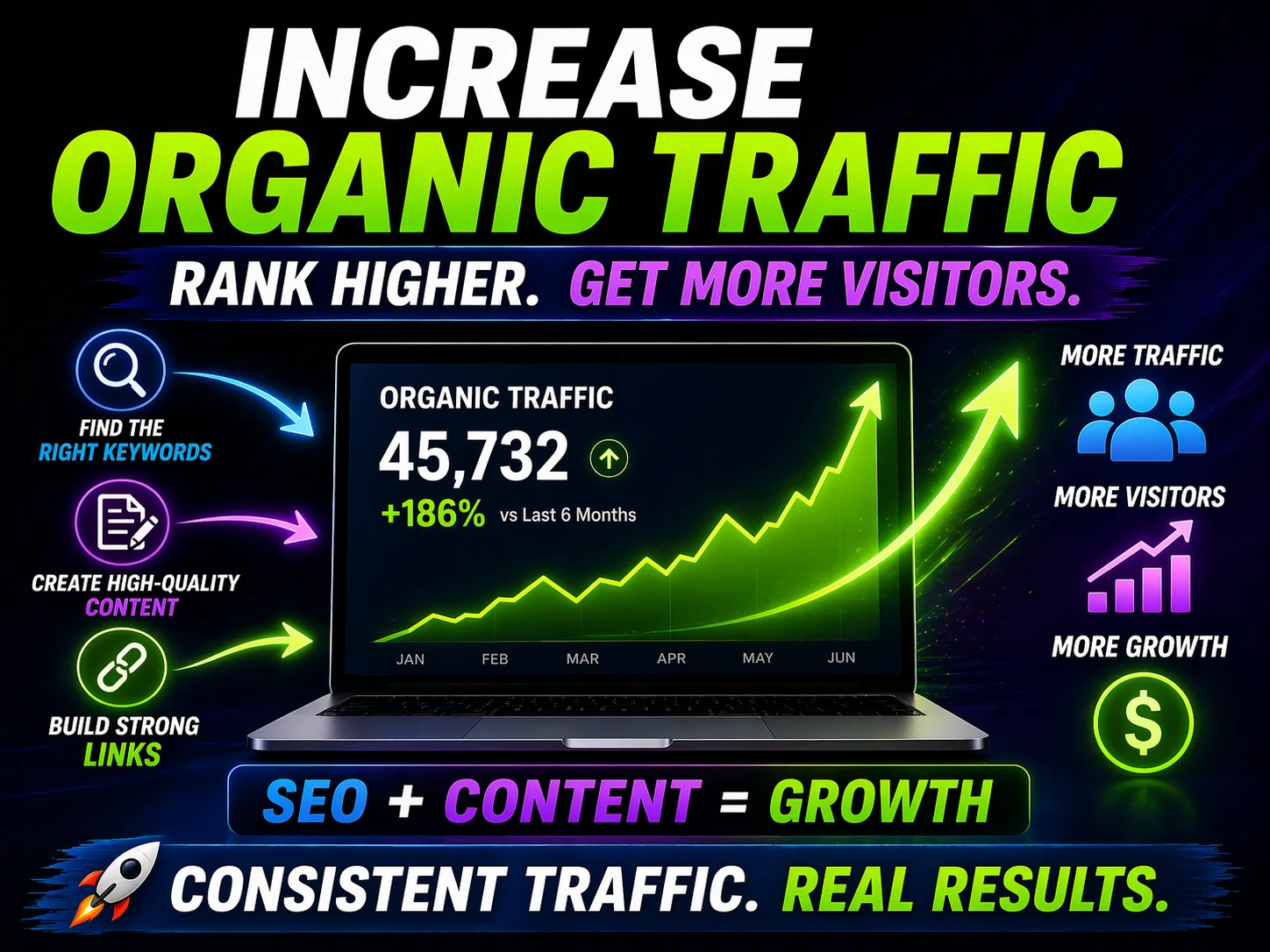
Organic traffic is the most valuable traffic your website can receive. It costs nothing per click, it compounds over time, and the visitors it delivers are actively searching for what you offer, which means they arrive with intent that paid channels cannot replicate at the same cost. The businesses that dominate their markets in 2025 are largely the ones that treated SEO as a long term infrastructure investment rather than a marketing tactic. Here is how they did it.
Why Organic Traffic Is Different From Every Other Channel
Every other marketing channel requires ongoing spend to maintain results. Paid ads stop the moment the budget does. Social reach requires constant posting. Email requires constant list building. Organic search, done correctly, builds an asset that appreciates over time. A well optimised page published today can drive traffic for five years without additional investment. A strong domain authority earned through consistent content and link building keeps delivering even when you are not actively working on it.
Step One: Get the Technical Foundation Right
No amount of great content will save a technically broken website. Before investing in content creation or link building, your site needs to pass a technical SEO audit. The most common issues we find when auditing new client sites are: slow page load times (especially on mobile), crawl errors that prevent Google from indexing pages, missing or duplicate meta data, broken internal links, and poor site structure that makes it difficult for Google to understand which pages are most important.
Core Web Vitals Are Not Optional
Google confirmed Core Web Vitals as ranking signals in 2021, and their weighting has only increased since. Your site needs an LCP (Largest Contentful Paint) under 2.5 seconds, a CLS (Cumulative Layout Shift) score under 0.1, and an INP (Interaction to Next Paint) under 200 milliseconds. Sites that clear these thresholds rank better, convert better, and retain visitors longer. Run a PageSpeed Insights test on your five most important pages today and address anything scoring below 80.
Step Two: Build a Content Architecture Around Real Search Intent
The biggest mistake businesses make with content is writing about what they find interesting rather than what their audience is searching for. Keyword research is not about stuffing terms into paragraphs: it is about understanding the specific questions, comparisons, and problems your potential customers type into Google, and then building content that answers those questions better than anyone else.
The most effective content architecture we build for clients uses a pillar and cluster model. A pillar page covers a broad topic comprehensively (something like "complete guide to [your service category]") and cluster pages go deep on specific subtopics that link back to the pillar. This structure signals topical authority to Google and creates an internal linking ecosystem that distributes page authority throughout the site.
Target Informational Searches, Not Just Transactional Ones
Most businesses only optimise for keywords with immediate purchase intent. This misses the majority of the search journey. Informational searches, "how does X work," "best way to Y," "what is the difference between A and B", make up the vast majority of searches in almost every category. Capturing users at the research stage, when they are forming opinions and building trust, puts you in the consideration set long before they are ready to buy.
The best SEO strategy is a content strategy. Create the most genuinely useful resource on the internet for the questions your audience is asking, and Google will send you the traffic.
Step Three: Build Domain Authority Through Links
Content alone is not enough. Google's algorithm uses backlinks (links from other websites to yours) as one of its strongest ranking signals. A link from a relevant, authoritative site tells Google that your content is trusted and worth surfacing. Sites with strong backlink profiles consistently outrank sites with equivalent content but weaker link profiles.
The most sustainable link building strategies in 2025 are: creating genuinely linkable assets (original research, comprehensive guides, useful tools), guest posting on relevant publications in your niche, digital PR campaigns that earn media coverage, and building relationships with complementary businesses whose audiences overlap with yours. Buying links from link farms or using automated schemes still carries significant penalty risk and should be avoided entirely.
Step Four: Optimise for Featured Snippets and People Also Ask
Featured snippets (the answer boxes that appear at the top of Google search results) are among the highest value organic placements available, because they appear above position one and generate significant clicks without requiring you to be ranked first. The key to earning them is structuring your content to directly answer specific questions in a concise, clearly formatted way. Numbered lists, definition paragraphs, and comparison tables all have elevated rates of snippet capture.
People Also Ask boxes present a similar opportunity. Identify the PAA questions Google is surfacing for your target keywords, create content that answers each one directly, and format those answers to match Google's preferred snippet structure. Each question you capture is additional visibility on the results page without requiring a separate ranking position.
Step Five: Internal Linking and Site Architecture
One of the most overlooked organic traffic levers is internal linking. Every internal link on your site passes some degree of authority from the linking page to the destination. A systematic internal linking strategy, ensuring your highest value pages receive links from other strong pages on your site, can move rankings without any external link building. Audit your site for orphaned pages (pages with no internal links pointing to them) and address them immediately.
Step Six: Measure What Matters and Iterate
Organic traffic growth is not linear. It takes three to six months for most SEO changes to show measurable results, which means the temptation to abandon a strategy before it compounds is enormous. The businesses that win with organic search are the ones that measure consistently, tracking not just traffic volume but keyword rankings, click through rates, time on page, and most importantly, organic traffic to conversion rates, and iterate based on what the data shows rather than what feels right.
The Bottom Line
Increasing organic website traffic is not a campaign. It is a compounding investment in technical excellence, content quality, and domain authority that pays increasing returns over time. The businesses that commit to it fully, with a proper technical foundation, a keyword informed content strategy, and a consistent link building programme, consistently outperform those that rely on paid channels alone. Start with the technical audit, build the content architecture, earn the links, and then measure everything. The traffic will follow.
Ready to Grow Your Organic Traffic?
We build SEO strategies that compound. Let us audit your site and show you exactly where the opportunity is.
Get Your Free SEO Audit →