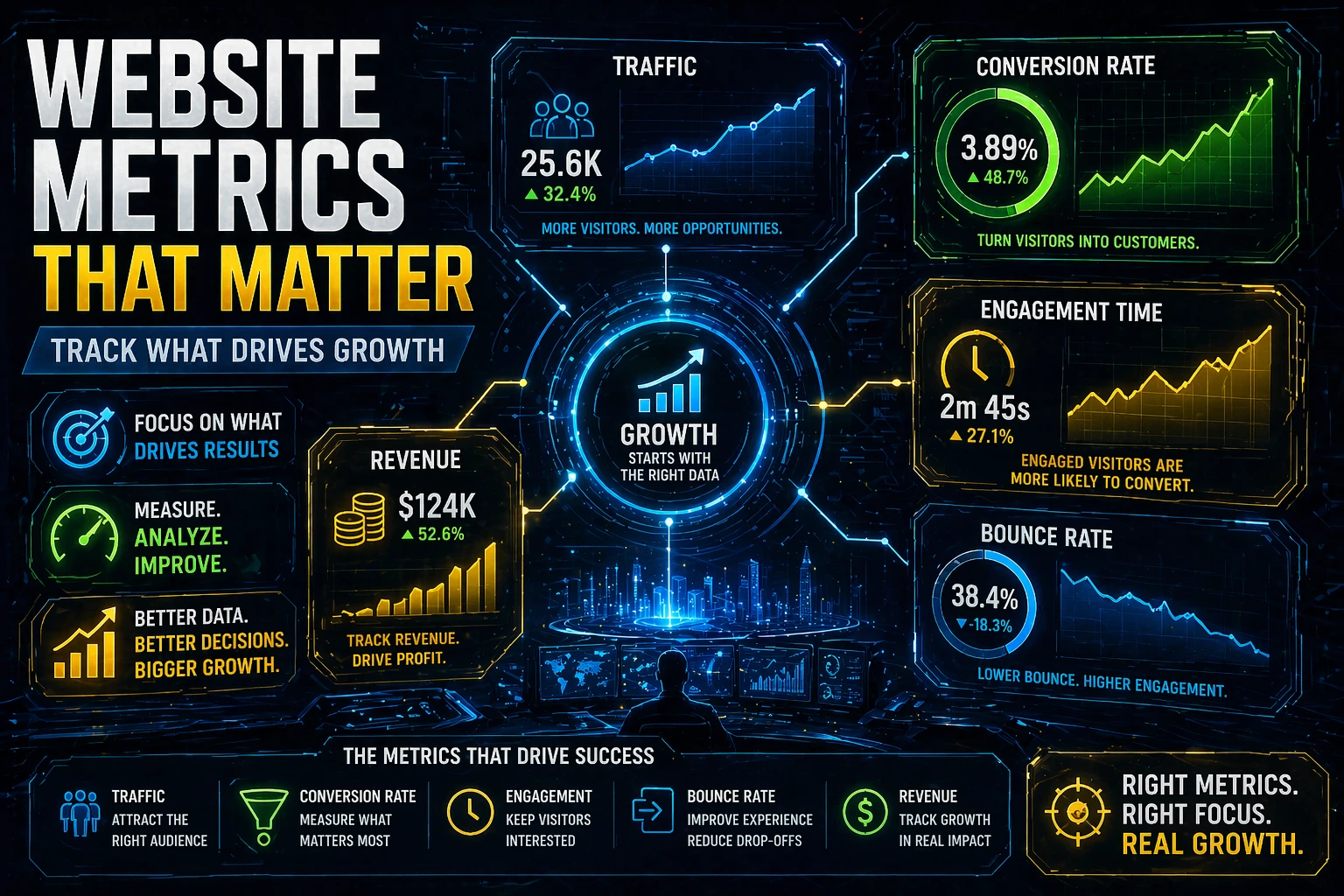
Better reporting should make business decisions easier. Instead, many dashboards create more confusion by treating every metric like it carries equal importance. It does not.
Why Most Reporting Fails
Businesses do not usually suffer from a lack of data. They suffer from a lack of interpretation. Reports become crowded with numbers that look important but do not clearly connect to revenue or lead quality.
Teams get overwhelmed, and leadership starts distrusting marketing because the reporting feels busy without feeling useful.
Start With Conversions, Not Traffic
Traffic matters, but only in context. A smaller volume of qualified visitors can outperform a larger volume of weak traffic every single month.
Define what a meaningful conversion is for your business and build reporting around that outcome.
Track Source Quality, Not Just Source Volume
Where traffic comes from matters. But what matters more is whether that traffic turns into action. Compare channels by conversion rate, cost per lead if applicable, and eventual sales quality where possible.
A channel that looks smaller can be the best one once outcomes are measured.
Engagement Metrics Need Context
Bounce rate, engagement time, and pages per session can be helpful, but they only become meaningful when paired with page purpose. A contact page should not be judged the same way as a long form article.
Use engagement data to identify friction, not to chase arbitrary targets.
Measure the Pages That Influence Decisions
Look closely at your top landing pages, top exit pages, and key service or product pages. These are often where the site either builds momentum or loses it.
If a page gets strong traffic but weak engagement and weak conversions, it deserves attention fast.
If a metric does not help you make a decision, it probably does not deserve a weekly meeting slot.
Attribution Should Be Practical
Perfect attribution is rare. That does not mean you should ignore attribution altogether. The goal is not perfect certainty. It is better decision making.
Know which channels tend to introduce users, which channels help close them, and which pages consistently assist conversions.
Choose a Short KPI List
For most businesses, a useful monthly dashboard can stay surprisingly lean. Sessions, qualified conversions, conversion rate, top traffic sources, top landing pages, and cost per result may already cover most of what matters.
Each metric should tie to a question the business actually needs answered.
Good Reporting Changes Behaviour
The value of analytics is not in the dashboard itself. It is in the decisions that follow. Better reporting should lead to page improvements, offer changes, and clearer prioritisation.
If the report ends with no action, the problem is not the software. It is the structure of the reporting conversation.
Turning Insight Into Action
The value of a strong article is not the agreement it creates. It is the decisions it helps you make next. When a business turns insight into specific execution, even small strategic improvements can compound quickly over the following quarter.
Need a Cleaner Marketing Dashboard?
We help businesses define the right KPIs, connect tracking properly, and turn marketing data into decisions instead of noise.
Book an Analytics Review →