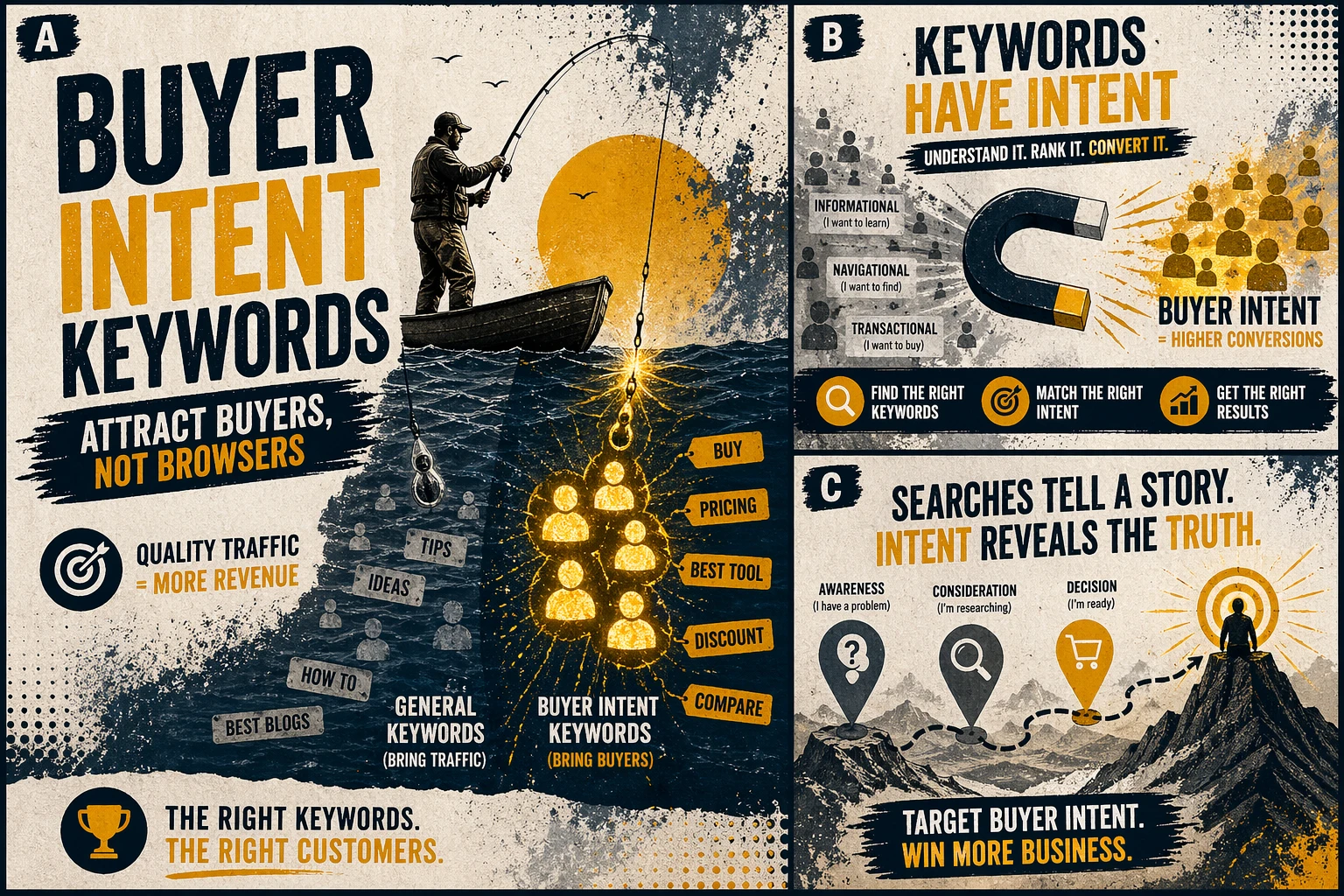
Keyword research shapes more than rankings. It influences your pages, your messaging, and the kind of people your website attracts. Done properly, it helps your business show up for the searches that matter commercially.
Why Volume Alone Misleads Businesses
A keyword can look exciting on paper and still be a bad target. High search volume means very little if the people searching are not close to making a decision or if the search results are dominated by competitors you are not ready to challenge.
Small and growing businesses usually get the best results by targeting keywords that show real intent. These are searches where the user wants a provider, a solution, a comparison, or a next step. The volume may be lower, but the commercial value is often much higher.
Start With Services, Locations, and Problems
The best keyword research usually starts with plain business logic. What do you sell. Where do you sell it. What problems does it solve. Those three buckets often create the most valuable target list.
Service keywords help you build core pages. Location keywords support local visibility. Problem aware keywords create informative content that educates readers while moving them closer to a buying decision.
Understand the Difference Between Informational and Commercial Searches
Informational searches are useful because they build reach and authority. Commercial searches are useful because they capture demand closer to action. A strong strategy uses both, but it does not confuse them.
A blog post may bring in top of funnel traffic, while a service page targeting a specific offering in a specific city may produce the actual lead. If you measure both the same way, you will misjudge where your revenue is coming from.
Study the Search Results Before You Commit
Never choose a keyword in isolation. Search it. Look at the results. Are they blog posts, directories, service pages, videos, or mixed results. This tells you what Google believes users want when they search that phrase.
If the result page is full of commercial landing pages and you publish a soft educational article, you may be fighting the intent.
Build Topic Clusters Around Real Demand
A single keyword is rarely the full opportunity. Strong SEO content grows when you build a cluster around a topic. That means a core service or guide page supported by related articles, comparisons, and FAQs.
This helps users and strengthens topical depth, which can improve how search engines understand your authority on the subject.
The goal of keyword research is not to find words with volume. It is to find demand that can become business.
Find the Easier Wins First
Early SEO momentum often comes from keywords with moderate competition and clear intent. That could be niche service terms, long form local searches, or problem focused keywords where larger brands have not created strong content yet.
The better move is to build traction through realistic opportunities, then expand upward once authority grows.
Map Keywords to the Right Pages
Every important keyword should have a natural page home. If the term reflects a service, it likely belongs on a service page. If it reflects a research question, it likely belongs in a blog or resource page.
This keeps the site organized and prevents internal competition where multiple pages try to rank for the same term without a clear hierarchy.
Use Keyword Research to Improve Messaging Too
Keyword data is not just for rankings. It tells you how people describe their problems, what outcomes they care about, and what comparisons they make before choosing a provider.
That language can improve headlines, offers, calls to action, and even sales scripts.
Turning Insight Into Action
The value of a strong article is not the agreement it creates. It is the decisions it helps you make next. When a business turns insight into specific execution, even small strategic improvements can compound quickly over the following quarter.
Want a Keyword Strategy Built Around Revenue?
We build content and page targeting around buyer intent, local search demand, and realistic ranking opportunities, not vanity traffic.
Book a Keyword Strategy Session →