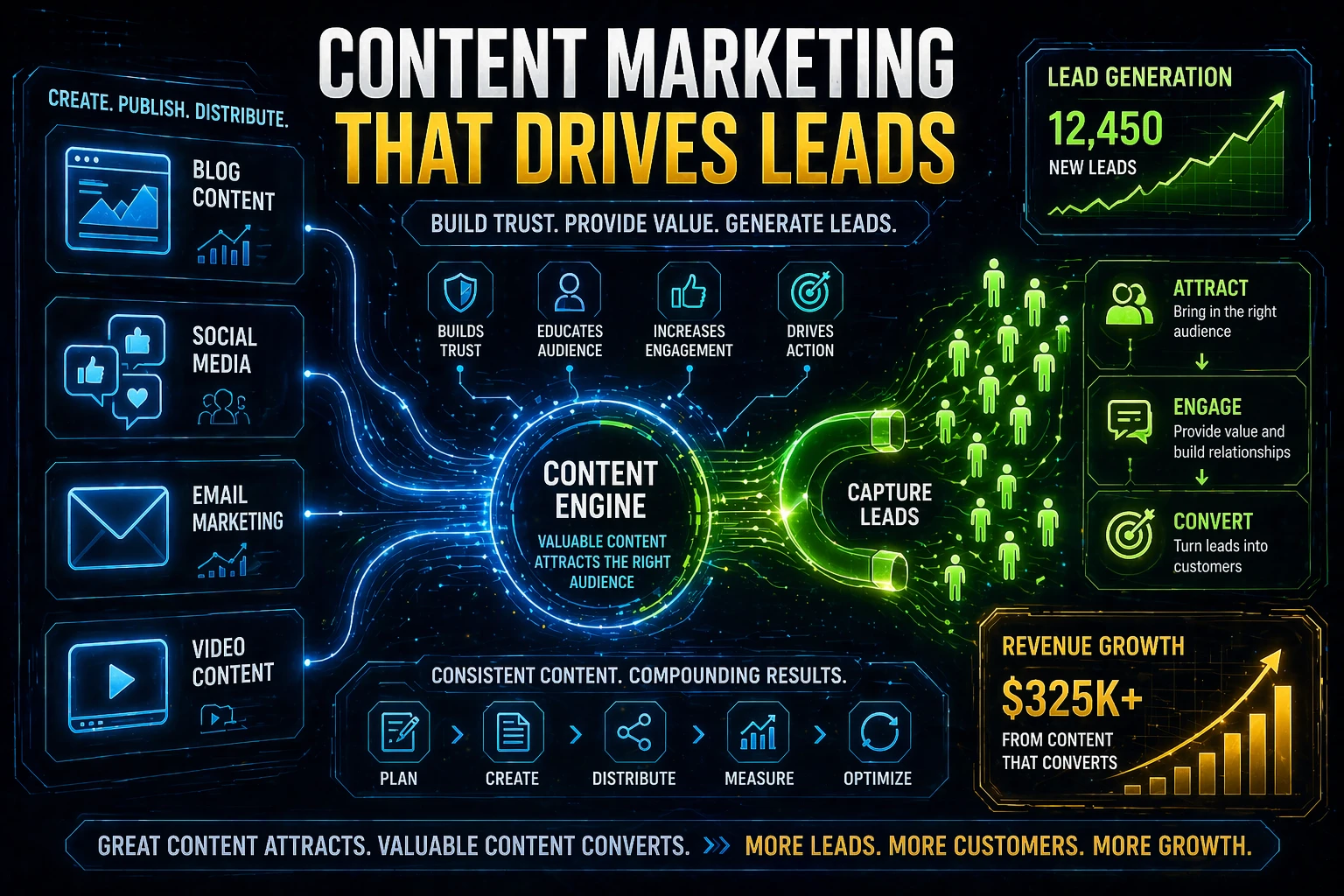
Content should do more than fill your website. It should help readers understand your expertise, trust your perspective, and move closer to the decision to work with you.
Why Businesses Publish So Much Weak Content
A lot of content gets produced because consistency sounds strategic. But publishing regularly is not the same as publishing usefully. Businesses end up with blogs that are technically active but commercially disconnected.
The problem is usually intent. If the content is not tied to real audience questions, real search behaviour, or real service goals, it becomes hard to justify and even harder to scale.
Lead Generating Content Starts With Buyer Questions
The strongest blog topics usually come from the exact questions prospects ask before they contact you. Pricing questions, comparison questions, process questions, and expectation questions are all powerful because they sit close to decision making.
When you answer those questions well, your content does more than rank. It shortens the sales cycle by educating the reader before the first conversation even begins.
Content Should Support the Whole Funnel
Top of funnel content builds visibility. Middle of funnel content builds trust and clarity. Bottom of funnel content reduces hesitation and helps the reader choose.
That does not mean every article needs to force a hard sell. It means every article should know where it sits in the buying journey and what next step it supports.
Authority Comes From Specificity
Generic advice rarely builds authority. Specific insight does. Readers trust content more when it feels grounded in experience, clear thinking, and real world application.
Examples, practical standards, clearer language, and confident recommendations all help.
Calls to Action Should Match Intent
A reader who found you through an educational search may not be ready to book immediately. But they may be ready for a checklist, an audit, a guide, or a consultation request if the offer feels like a natural next step.
Good content calls to action do not interrupt the reader. They continue the momentum.
Content becomes valuable when it answers the questions people ask before they buy, not just the questions search tools can measure.
Refresh and Repurpose What Already Works
One of the easiest ways to improve content performance is to revisit what is already attracting traffic or earning attention. Update it, improve the examples, sharpen the structure, and add stronger calls to action.
A strong article can also be repurposed into social content, email content, and internal linking support for other pages.
Measure Business Outcomes, Not Just Views
Pageviews can help identify reach, but they should not be the only measure of success. Look at assisted conversions, lead quality, and whether the content supports rankings for higher intent pages.
Content deserves investment when it becomes part of the growth system, not when it only makes the blog look active.
The Best Content Feels Useful and Decisive
Readers do not need endless neutral summaries. They need useful guidance from people who understand the market.
If your content teaches clearly, proves competence, and points toward a smart next step, it will outperform content written purely to fill a calendar.
Turning Insight Into Action
The value of a strong article is not the agreement it creates. It is the decisions it helps you make next. When a business turns insight into specific execution, even small strategic improvements can compound quickly over the following quarter.
Want a Content Plan That Converts?
We build authority content, SEO page clusters, and calls to action that turn useful content into measurable business outcomes.
Build My Content Strategy →