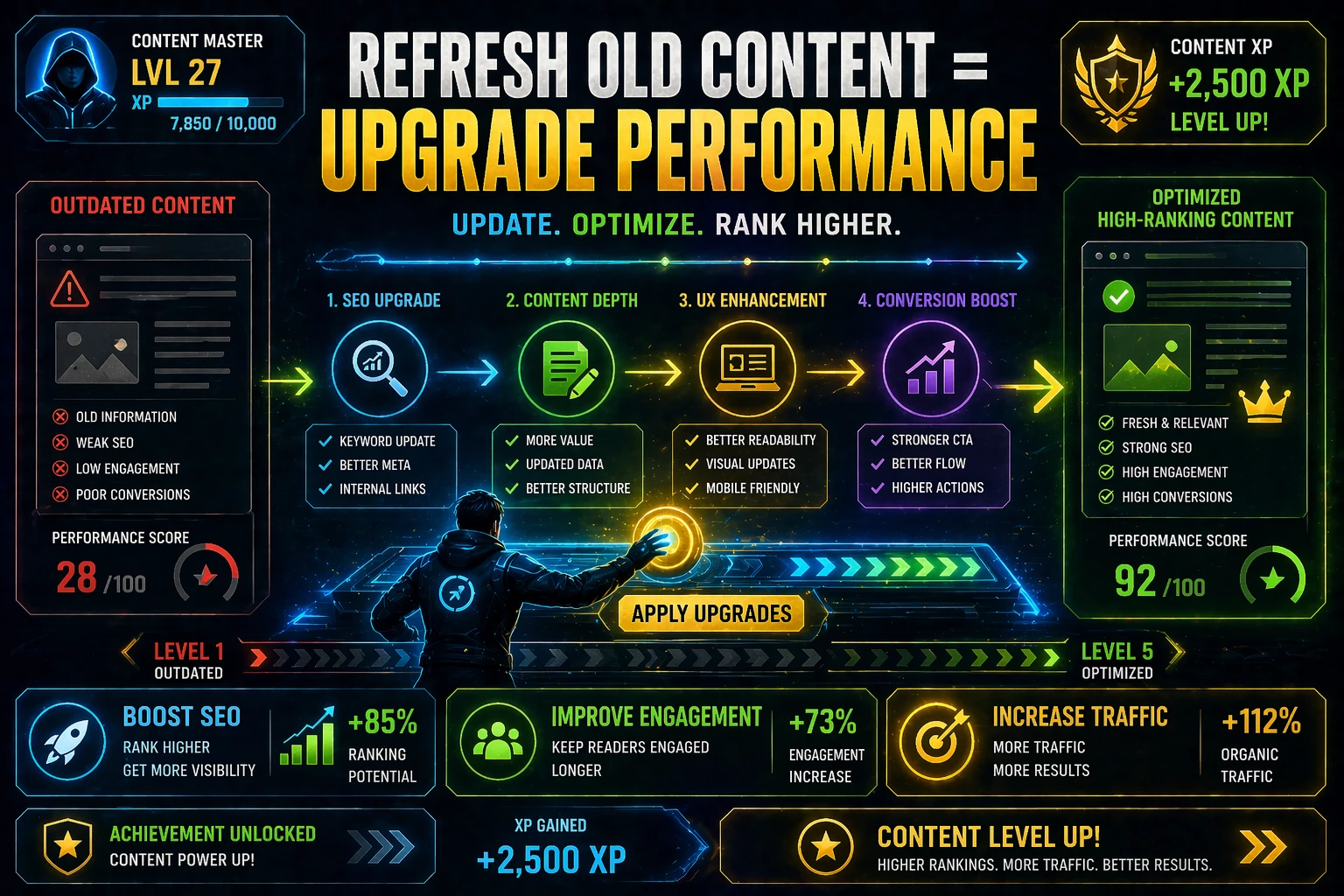
Many businesses focus almost entirely on creating new content. That makes sense on the surface — new articles signal activity, expand keyword coverage, and keep the team feeling productive. But it can also leave significant value sitting dormant in pages that already exist and are already indexed.
Why Older Content Slips
An article can lose performance for many reasons. Competitors publish better content on the same topic. Search intent shifts as the market evolves. Examples become outdated. Internal links weaken as the site grows. Or the page simply becomes less comprehensive than the questions it is supposed to answer.
That does not always mean the topic is finished or the investment was wasted. Often it means the page needs maintenance — the same way a tool needs sharpening rather than replacing. The underlying relevance is still there. The execution needs to catch up with a changed environment.
Existing Pages Have an Advantage
Older pages may already have accumulated search history, backlinks, crawl frequency, and relevance signals that a brand new article starts without. Improving them can be more efficient than building from zero — especially when the topic still matters commercially and the page still attracts some traffic.
This is especially true in competitive niches where ranking a new page from scratch is slow. A page that ranked well 18 months ago and has since slipped still has structural authority that a refresh can reactivate — often much faster than waiting for a new article to earn the same standing.
Refresh Work Should Be Strategic
Not every article deserves updating. Prioritise pages that once performed well but have seen traffic decline. Look for articles that still align with the business's current services and positioning. Focus on pages that attract visitors but do not convert — where the problem may be outdated content rather than weak keywords.
A simple content audit — sorting pages by traffic trend, keyword ranking movement, and time since last update — will surface the best refresh candidates quickly. The return on refresh effort is usually strongest where there is existing momentum to restore, not where there is little history to build on.
What to Update
Improve outdated examples and replace references to data that has aged. Tighten headings so they better match current search phrasing. Add sections that address questions the original article did not cover. Strengthen the call to action to better align with where the business is now. Refresh internal links to point to newer relevant content.
Often, even moderate refinements can materially improve a page's usefulness — not just for rankings but for the actual reader experience. A page that is easier to read, more current, and more complete will perform better on every dimension: time on page, bounce rate, conversion rate, and eventual search position.
Sometimes the fastest content win is not the next article. It is the last good one you forgot to improve.
Do Not Refresh Only for Search Engines
A refresh should make the page genuinely better for readers first. Better structure, clearer advice, and more accurate information tend to support search performance naturally — because search engines increasingly reward pages that satisfy the reader rather than just matching keyword density.
Pure SEO-driven refreshes that add keyword mentions without improving the actual content rarely hold their gains. The pages that benefit most from refreshing are those where the update makes them meaningfully more useful — not just more technically optimised.
How Refreshing Supports Conversion
An article may still attract traffic while doing very little for the business. A post that ranks for an informational query but never connects the reader to the service it describes is a missed opportunity at scale. Updating the page with stronger relevance signals, clearer pathways to services, and better proof can transform a traffic source into an actual conversion driver.
This is one of the most overlooked benefits of content refreshing. The goal is not only to recover search traffic — it is to make that traffic useful. An improved article that guides the reader toward the right next step earns a commercial return that the original version may never have captured.
Build Refreshing Into Operations
A content library performs better when review cycles are a regular operational habit rather than an occasional project. The businesses that make the most of their existing content are those that schedule regular audits — quarterly or biannually — and treat refresh work as standard editorial practice rather than an emergency fix.
That discipline keeps content from becoming digital clutter: pages that exist, consume crawl budget, and dilute the site's overall quality signals without delivering value. A maintained library of well-kept, current articles signals a higher quality standard to search engines and to readers — and that signal compounds over time.
Turning Insight Into Action
The strongest marketing articles become useful when they change the next decision. The goal is not just to understand the principle. It is to turn that principle into clearer priorities, better execution, and stronger results over time.
Need a Content Refresh Plan?
We review existing articles, improve relevance and clarity, and help businesses get more from pages they have already invested in.
Refresh My Content →