A business blog can publish regularly and still struggle to gain traction if the content lacks structure. One of the most effective ways to improve that structure is through content clusters — a strategy that helps both search engines and readers understand what a site genuinely knows, and how deeply.
What a Content Cluster Is
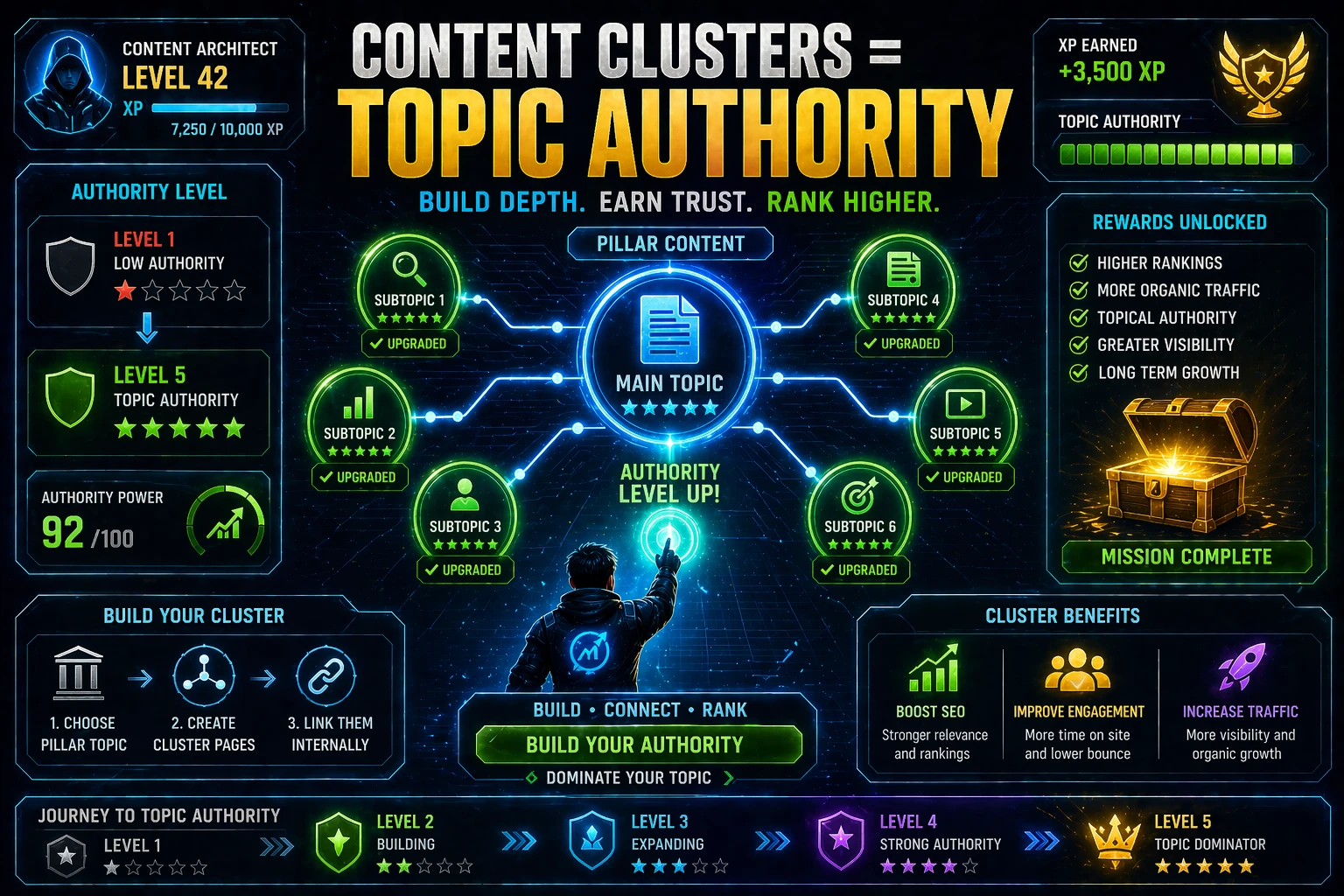
A content cluster is a group of related articles built around a core topic. One stronger pillar page introduces the subject broadly, while supporting articles explore important subtopics in more depth. Those supporting pieces link back to the pillar, and the pillar links out to them, creating a network of connected content.
The structure helps both users and search engines understand the relationship between pieces of content. Rather than every article standing alone, the cluster signals topical ownership — making it clear that a site is not just touching a subject but genuinely covering it.
Why Structure Matters
When content is scattered randomly, authority becomes diluted. Articles may overlap, cannibalise each other, or fail to build any clear signal around an area of expertise. This is especially common for businesses that publish consistently but without a plan — generating traffic that rarely compounds.
Clusters reduce that problem by making the site easier to interpret. Search engines can identify the pillar as the authoritative overview and use the cluster as evidence of depth. Readers benefit too — they can navigate the connected content rather than hitting dead ends or finding gaps where answers should exist.
Better Internal Linking
A clustered approach creates more natural internal linking opportunities. Those links help guide users deeper into the content, distribute relevance across the site, and strengthen topical pathways that search engines follow.
Internal links are one of the most underused SEO levers in small business publishing. They signal which pages matter, reinforce the relationship between related content, and keep visitors engaged longer. A well-linked cluster can meaningfully improve both average session depth and the ranking strength of its core pillar page — without any external link building required.
Topic Authority Is Earned Through Coverage
Search visibility often improves when a site demonstrates useful depth around a subject. That does not mean writing dozens of repetitive articles. It means answering the major questions a serious reader would have across the full decision journey — from first awareness to final action.
For a service business, a content cluster might cover the main service on the pillar, then support it with articles on common objections, comparison guides, process explanations, case examples, and FAQ content. Each piece adds a dimension the pillar cannot fully cover, and together they make the site feel comprehensive rather than surface-level.
Publishing more content is not the same as building more authority. Structure is what turns volume into credibility.
Clusters Improve Content Planning
This approach also helps teams plan smarter. Instead of asking what to post next in a vacuum, the business can look at an existing cluster and identify which supporting angle is still missing. That leads to more strategic publishing over time — content that fills real gaps rather than repeating familiar ground.
It also makes content audits more useful. When articles are grouped by cluster, gaps are obvious. Underperforming pieces can be identified by their position in the structure — a supporting article getting no traffic may simply need better internal links from the pillar, rather than a full rewrite.
How to Start Simply
Begin with one commercially relevant topic that matters to the business and the customers it serves. Build one solid core page that covers the subject at a useful overview level — not a quick summary, but a genuinely useful resource. Then identify four to six supporting questions or subtopics that the core page cannot fully answer, and write focused articles around each.
That initial cluster is often enough to improve both content clarity and long-term SEO value. Once the model is working, it can be replicated for additional topics. Most businesses need three to five strong clusters to establish meaningful topical authority in their niche.
Why This Matters Beyond SEO
Even when search rankings are not the immediate priority, content clusters improve user understanding. They make a business look more informed, more organised, and more trustworthy. A site that clearly knows its subject — and demonstrates that knowledge in a structured way — earns more confidence from the people who find it.
That confidence has commercial value beyond rankings alone. It shapes how prospects evaluate the business, how long they stay, how many pages they read, and how ready they feel when they finally reach a contact form or pricing page. Authority built through content clusters pays dividends at every stage of the funnel.
Turning Insight Into Action
The strongest marketing articles become useful when they change the next decision. The goal is not just to understand the principle. It is to turn that principle into clearer priorities, better execution, and stronger results over time.
Need a Smarter Content Structure?
We plan content systems around search intent, internal linking, and topical depth so articles work together instead of competing with each other.
Build My Content Plan →