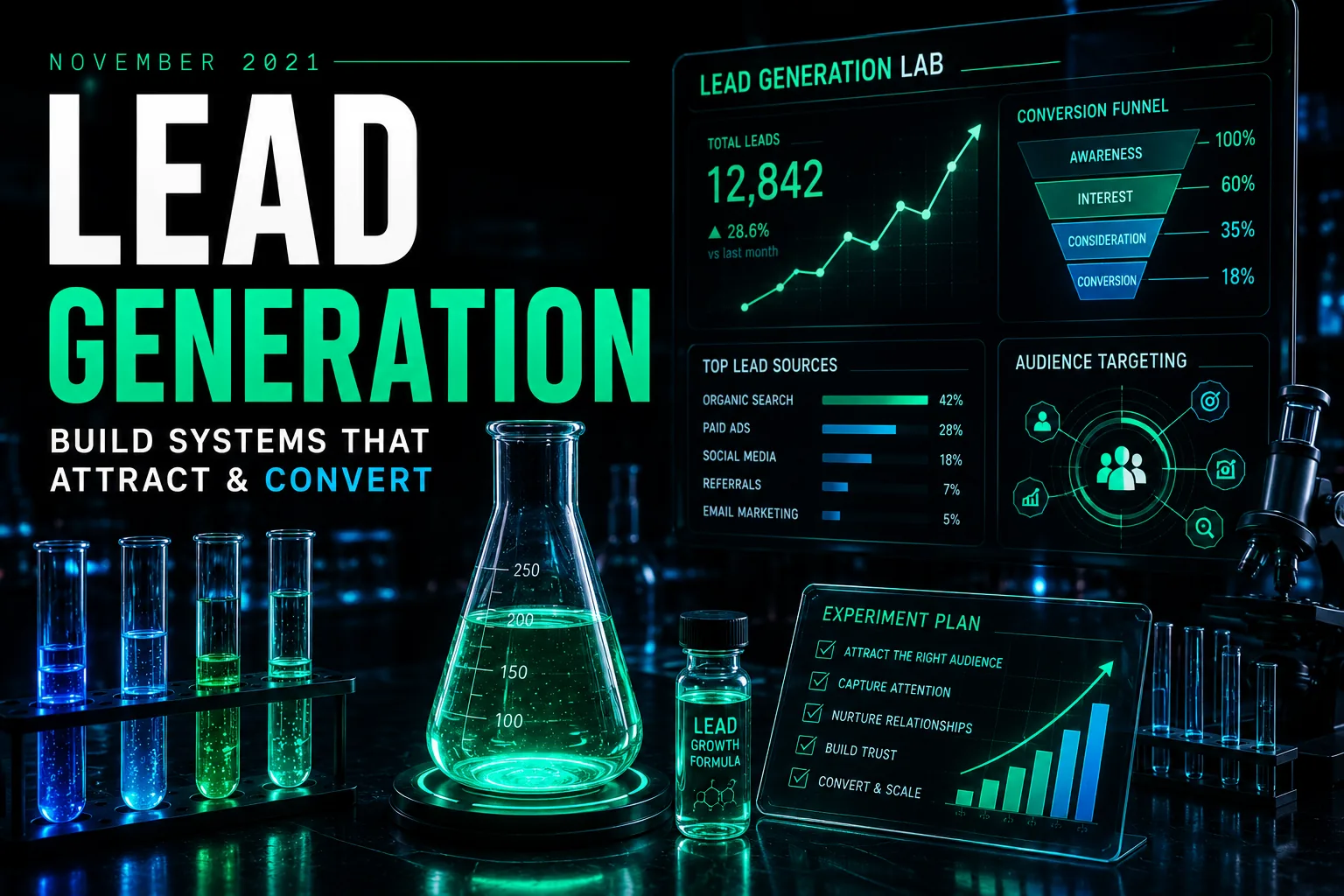
Why More Leads Was Not Always The Answer
In November 2021, many businesses were asking for more leads. The better question was whether they were attracting the right leads. A larger number of weak enquiries can drain time, reduce close rates, and create frustration for the sales team.
Strong lead generation is not only about volume. It is about fit. The best systems attract people who understand the service, trust the brand, and are ready for a clear next step.
The Offer Needed To Be Specific
Generic offers created generic leads. A clear offer helped people understand what problem the business solved and why it mattered. Specificity improved conversion because visitors could see themselves in the message.
For example, grow your business is broad. Generate more qualified local enquiries from search and conversion focused landing pages is sharper. The second message tells the customer what kind of result to expect.
Landing Pages Carried The Conversion
Ads and social posts create attention, but landing pages turn attention into action. A strong landing page needs a clear headline, proof, benefits, process, frequently asked questions, and a direct call to action.
Many businesses sent traffic to cluttered homepages and expected results. Dedicated landing pages often performed better because they stayed focused on one audience, one promise, and one next step.
Growth gets easier when the message is clear, the system is consistent, and every touchpoint helps the customer take the next step.
Follow Up Determined Revenue
Lead generation does not end when the form is submitted. Speed, clarity, and consistency in follow up often determine whether a lead becomes a customer. Businesses that waited too long or responded casually lost opportunities they had already paid to create.
A simple follow up system could include an immediate response, a clear next step, a reminder, and a second value based touchpoint. That structure improved trust and reduced lost leads.
The Bottom Line
Lead generation in 2021 worked best when attraction and conversion were treated as one system.
The businesses that won did not only get more enquiries. They built clearer offers, stronger landing pages, and better follow up processes that turned interest into revenue.
The Mistake Businesses Kept Making
The most common mistake was treating lead generation like a task instead of a business system. A task gets checked off and forgotten. A system gets measured, improved, and repeated. That difference matters because growth rarely comes from one isolated action. It comes from a collection of small choices that support each other over time.
For example, a business might publish one strong post, update one page, or run one campaign and then expect the entire market to respond. That is not how digital behaviour works. Customers usually need several signals before they trust a company. They may see a search result, check reviews, visit the website, compare social activity, read a page, and return later before taking action.
This is why lead generation needed to connect with the rest of the customer journey. The business had to ask what happened before the click, what happened after the click, and what information the customer needed before making a decision. When those pieces were disconnected, growth felt random. When those pieces worked together, results became easier to understand and improve.
How To Make The Strategy Practical
The best approach was to keep the system simple enough to execute. Businesses did not need a complicated marketing department to improve qualified demand. They needed a clear rhythm. Review the current position, choose one weak point, improve it, measure the result, and repeat the process monthly.
A practical rhythm could start with a short weekly review. Look at what was published, what was updated, what generated attention, and what created enquiries. Then separate activity from outcomes. Activity is useful only when it moves the business closer to a measurable result. A post that receives likes but sends no qualified traffic may still be useful for awareness, but it should not be mistaken for a conversion asset.
The strongest businesses also documented what worked. They saved high performing headlines, strong offers, common customer questions, useful testimonials, and campaign notes. Over time, that documentation became a playbook. The business no longer had to guess every month. It had a record of what the audience responded to and what helped people move forward.
What To Measure Without Getting Overwhelmed
Measurement does not need to become complicated. The goal is not to track every possible number. The goal is to track the few numbers that help the business make better decisions. For this topic, useful numbers often include form completions, call clicks, booked consultations, and close rates. Those numbers show whether the strategy is creating attention, trust, and action.
Vanity metrics can still provide context, but they should not control the strategy. A page view, impression, or like is only meaningful when it connects to a larger pattern. If visibility is rising but leads are flat, the message or conversion path may need work. If leads are rising but sales are weak, qualification or follow up may be the issue. If sales are improving but traffic is low, the business may need to scale the channel carefully.
This kind of thinking helped businesses move away from emotional decision making. Instead of saying the campaign feels slow or social media is not working, the team could identify where the system was breaking. That made the next move clearer.
A Simple Thirty Day Improvement Plan
The first week should focus on clarity. Review the main page, profile, campaign, or channel connected to lead generation. Ask whether a new customer would immediately understand what the business offers, who it helps, and why it is worth trusting. If the answer is no, fix the message before spending more money on traffic.
The second week should focus on proof. Add stronger testimonials, clearer examples, recent photos, helpful content, stronger calls to action, or better explanations. Customers need evidence. Proof reduces hesitation and helps the business look more credible in a crowded market.
The third week should focus on distribution. Once the message and proof are stronger, push the improved asset through the right channels. That might mean search optimization, social posts, email, paid traffic, or internal links from other pages. A strong asset still needs visibility.
The fourth week should focus on measurement. Review what changed. Look at the numbers, but also look at the quality of enquiries and conversations. Better marketing should not only create more activity. It should create more useful activity that helps the business grow with less waste.
Why This Still Matters
The lessons from 2021 still matter because customer expectations have only become sharper. People want faster answers, clearer proof, better design, and more useful content. They compare businesses quickly and reward the ones that make decisions easier.
Lead Generation is not about chasing a trend. It is about building a stronger path between attention and trust. When that path is clear, marketing becomes less chaotic. The business stops relying on hope and starts improving the pieces that actually influence revenue.
What To Do Next
- Review the strongest page or channel connected to this topic
- Identify one friction point that is costing trust or conversions
- Create one measurable improvement to test this month
- Track the result and repeat what works
The Real Business Advantage
Modern buyers do more research before they contact a company. They compare websites, reviews, social media, Google Business Profiles, and the overall quality of a brand’s online presence. Google has reported that people increasingly search with more specific intent, which means generic content is no longer enough. A business needs content that matches what people are actually trying to solve, not just keywords placed on a page.
This is where stronger articles create long-term value. A well-built post can support SEO, improve trust, help sales conversations, and give a business something useful to share across email, social media, and follow-up messages. It also helps position the company as active and knowledgeable. Customers can feel the difference between a business that has invested in its online presence and one that has left its digital storefront untouched. That difference can directly influence who gets the inquiry.
Want Better Quality Leads?
We build stronger offers, landing pages, lead capture paths, and follow-up systems designed to attract people who are ready to move.
Improve My Lead Flow →